|
Plank
Road Folk Music
Society
|
|
|
Fox
Valley Festival
2025
Concerts,
jam sessions, food,
music, and of course . .
. more music!
|
|
|
Two
days of folk concerts,
storytelling, workshops
and lots of jamming —
not to mention food
trucks and arts
exhibitors! It was all
happening at the 49th
Annual Fox Valley Folk
Music & Storytelling
Festival over Labor Day
weekend. Like last year,
the sprawling event was
held at Wheeler Park in
Geneva. And the weather
was perfect.
|
|
|
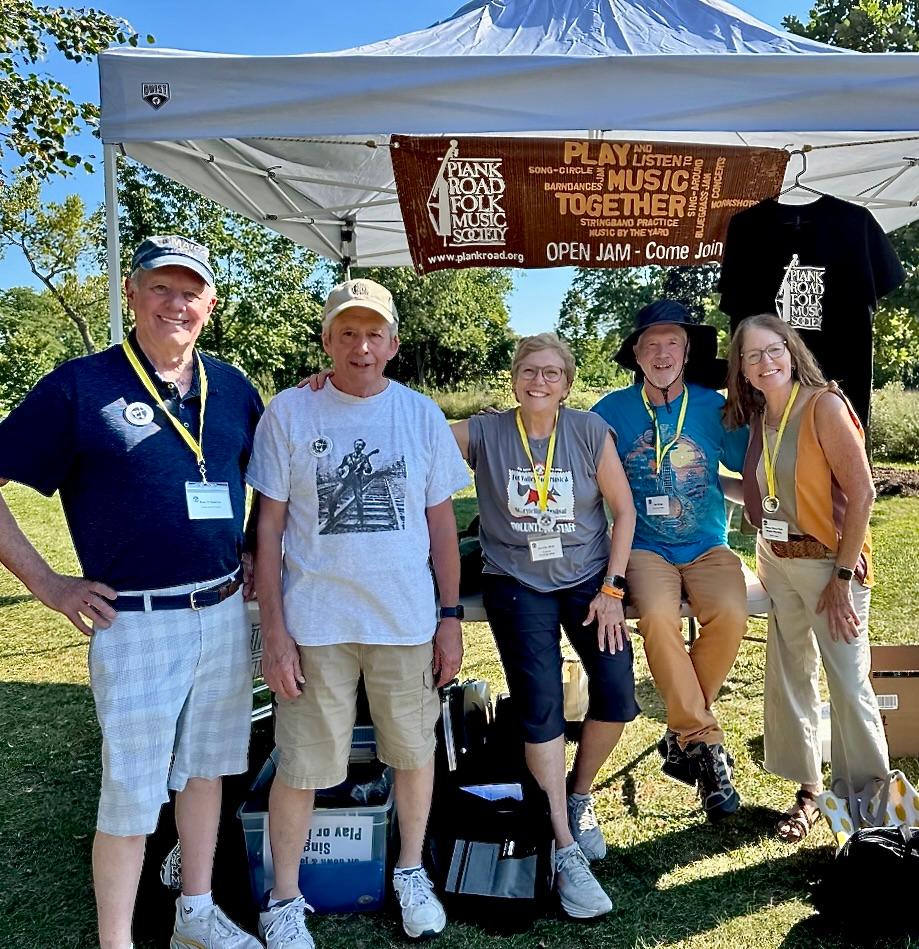
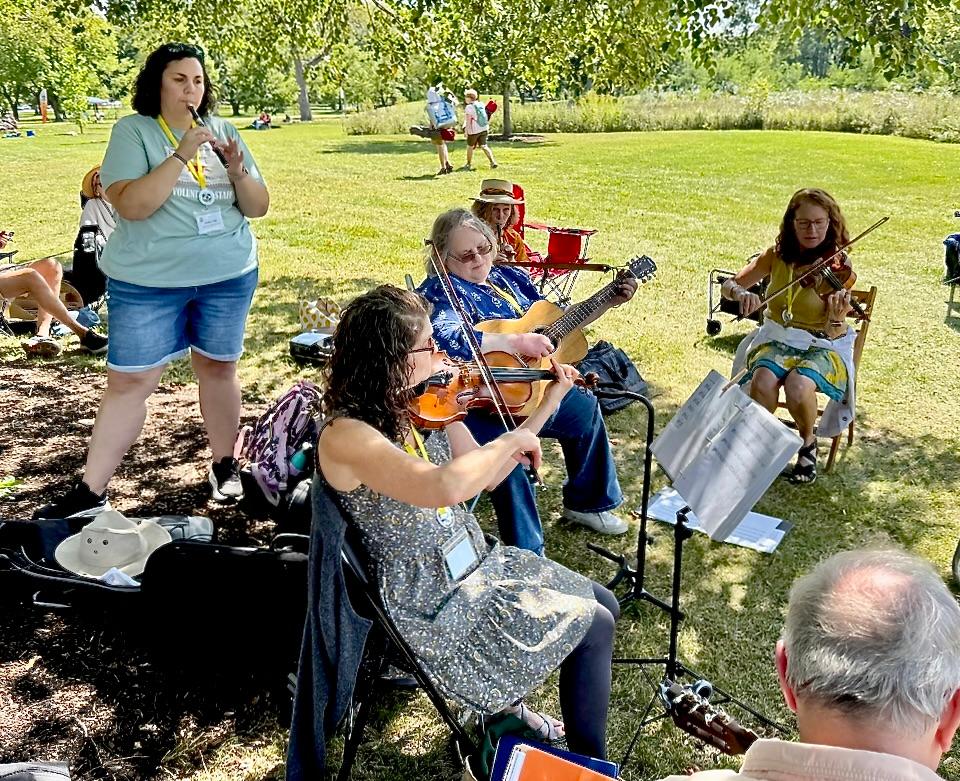
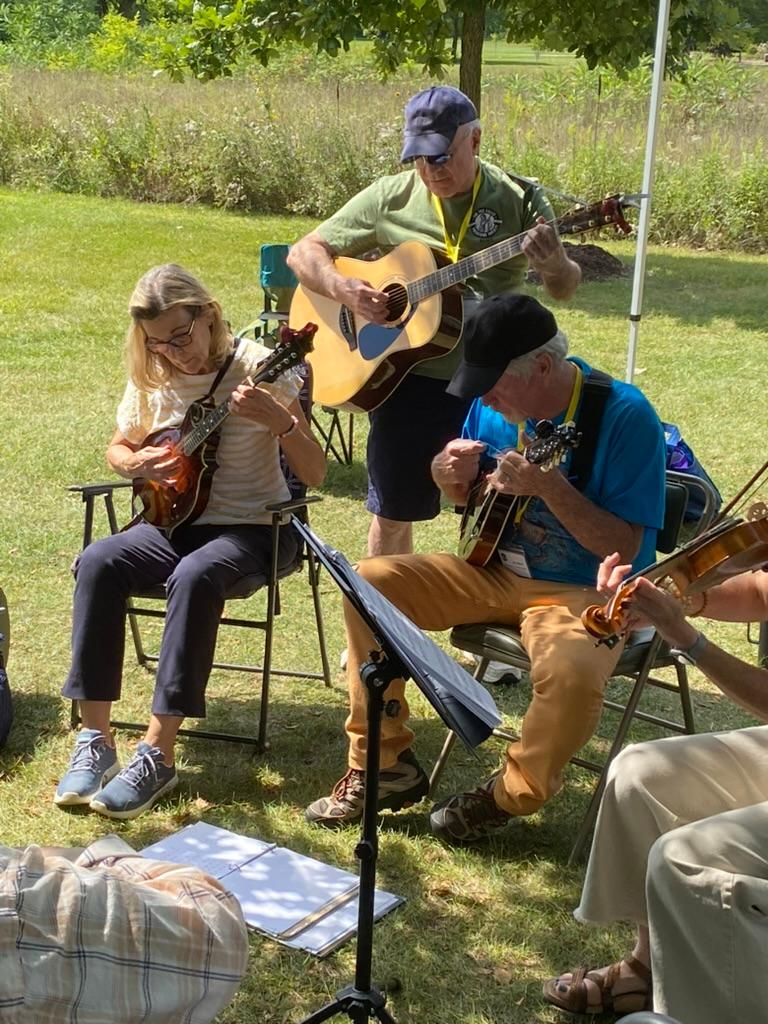
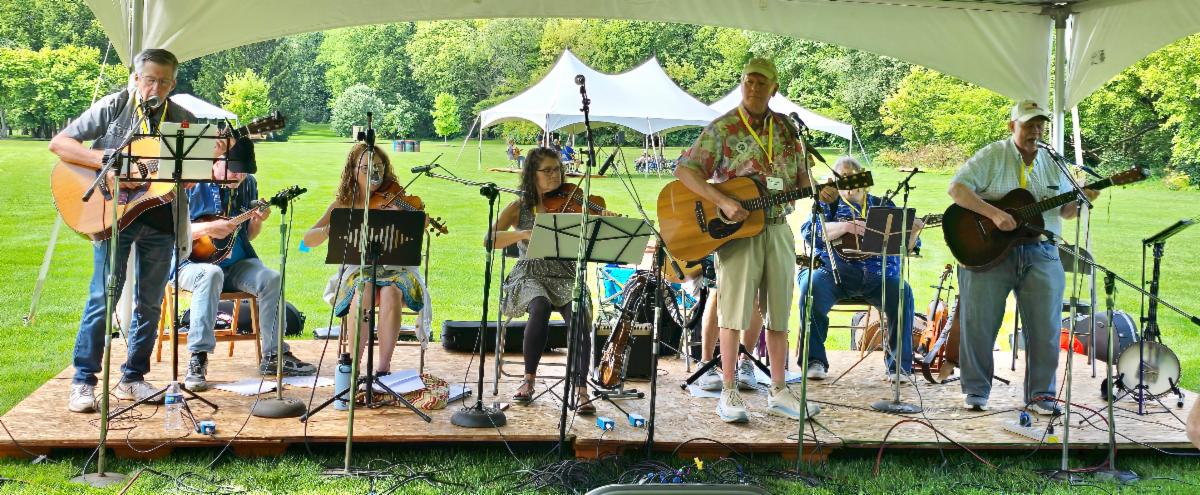
Plank
Road was
well-represented, both
at stage presentations
each morning, and later
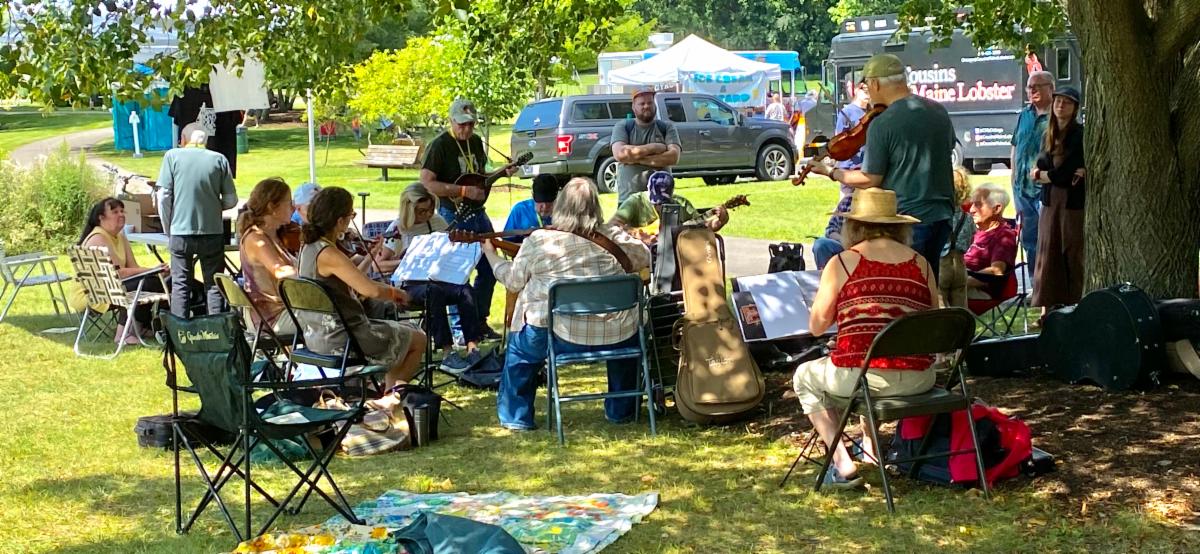
at the Plank Road tent,
where many folks stopped
by to visit and do some
jamming.
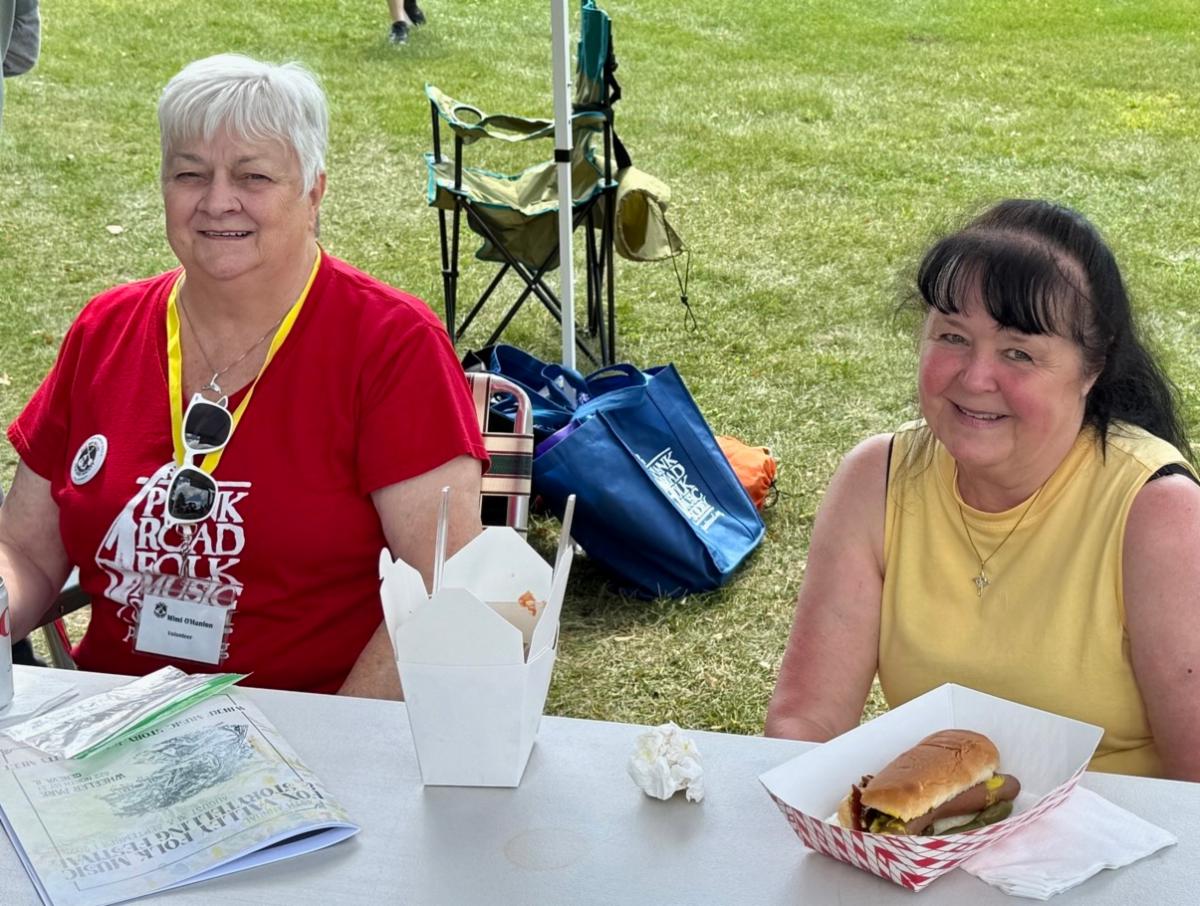
As
always, there were many
Plank Road volunteers
helping throughout the
2-day event, including
these fine folks . .
.
|
|
|
· Cheryl
Joyal
- Director
· Dave
Humphreys
· Gary
Blankenship
· Jen
Shilt
· Kristen
Fuller
· Bob
Cordova
· Joe
Schumacher
· Mimi
O’Hanlon
· Christine
Buik
· Ann
Stang
· Joel
Simpson
· Jennifer
Ashley
|
|
|
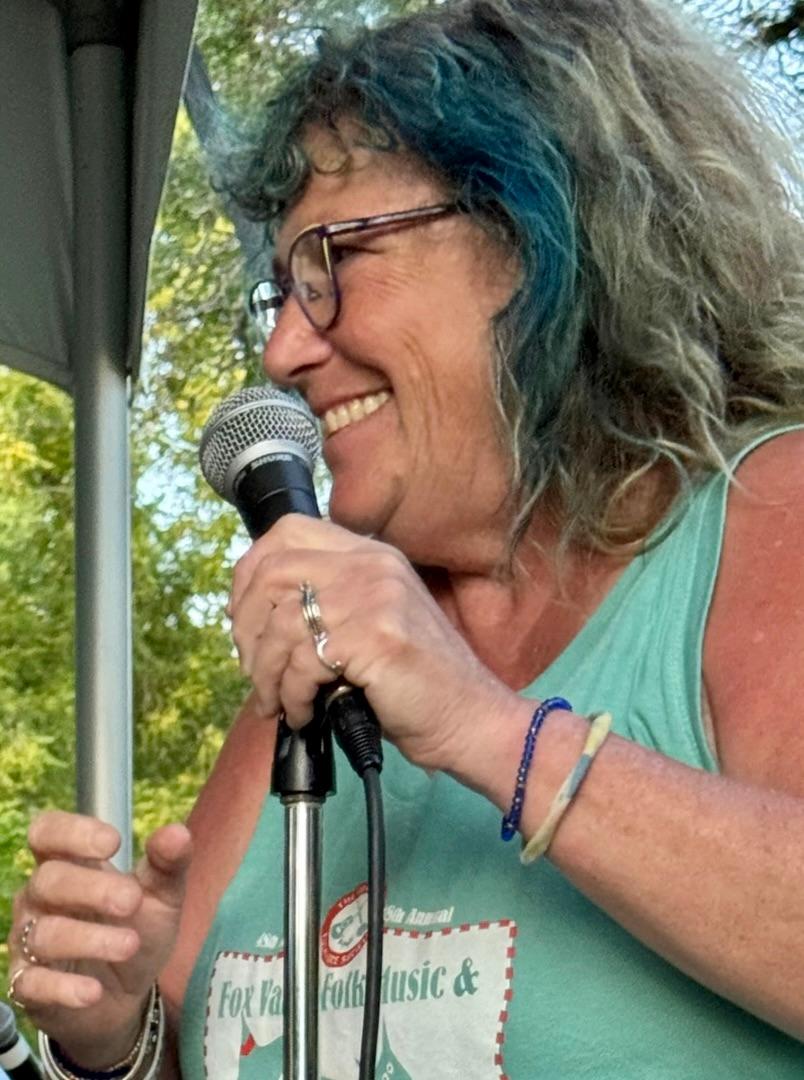
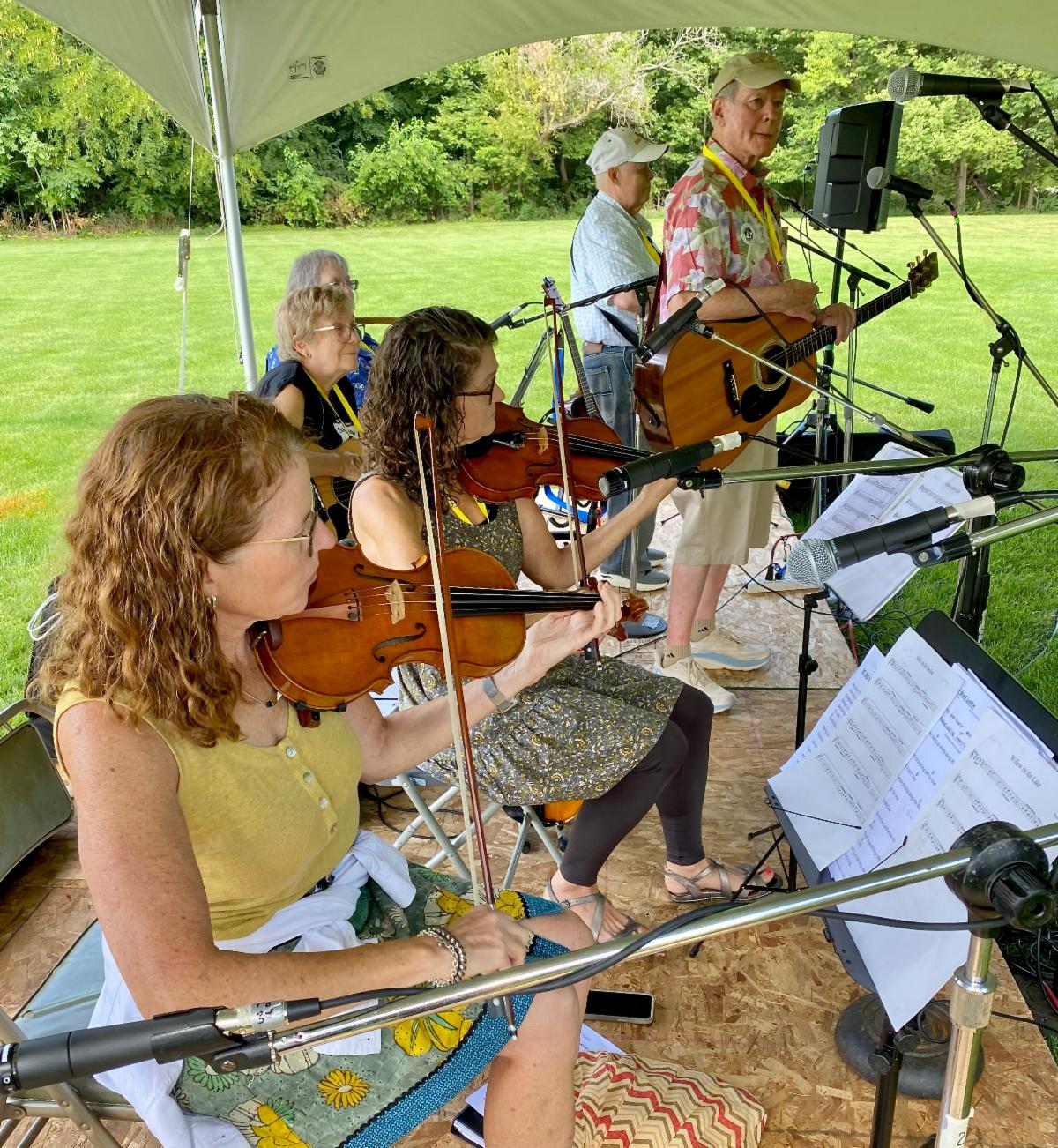
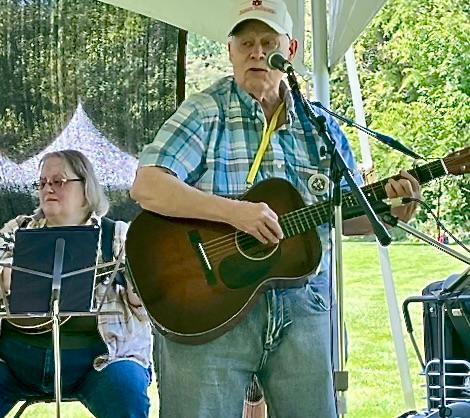
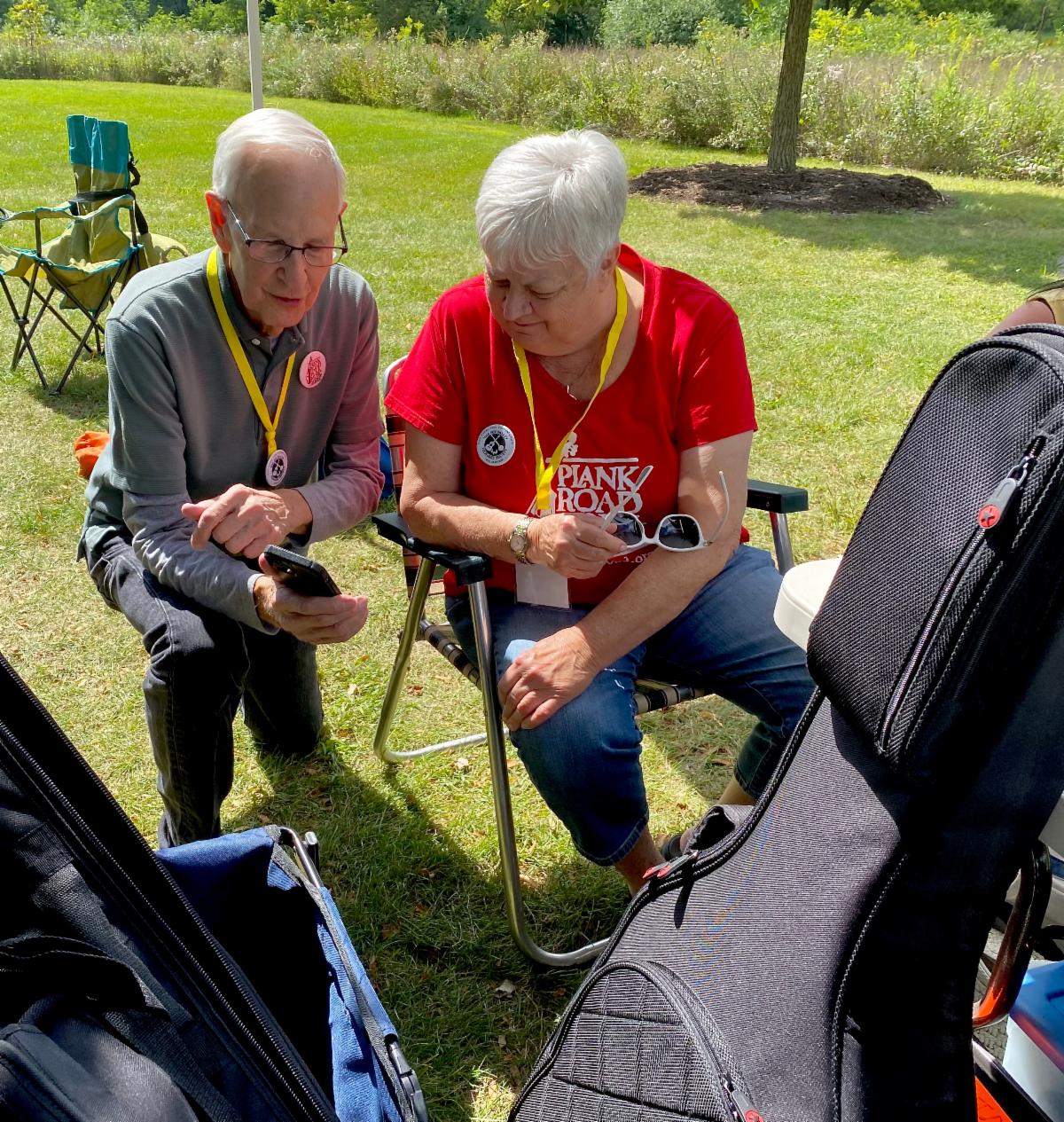
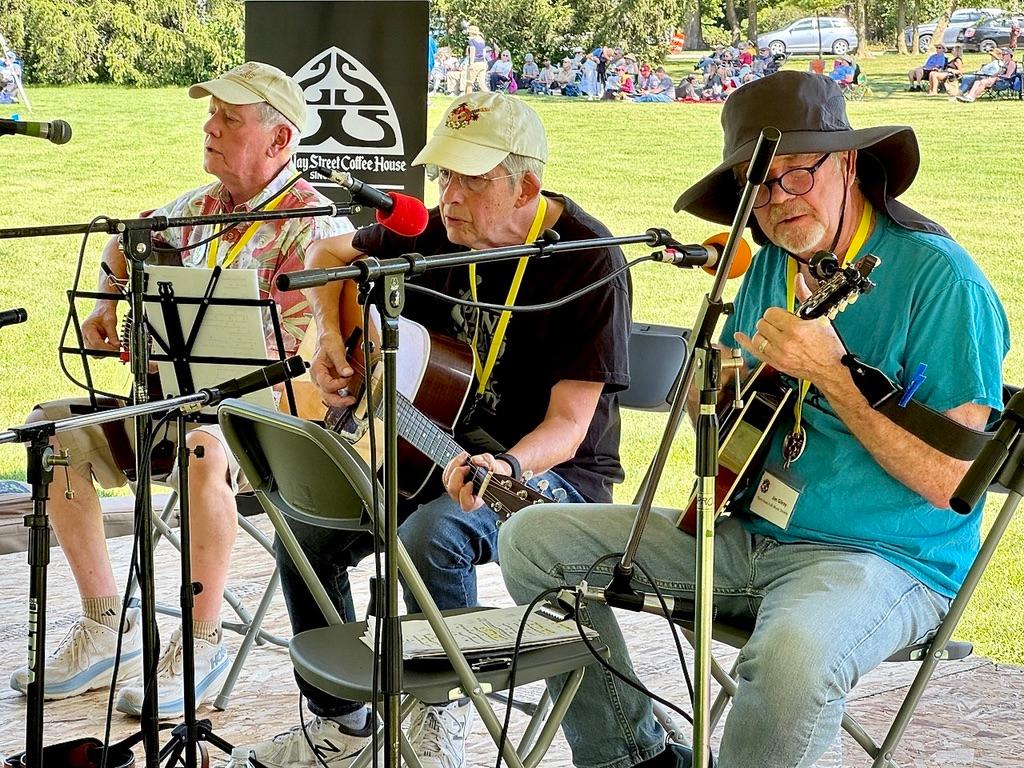
Here’s
a gallery of photos from
the Festival, provided
by Jen
Shilt (Official
Event Photographer
Extraordinaire!),
plus Dottie Lee,
Jeannine Gilroy
and Bill
Lemos.
|
|
|
|
|
|
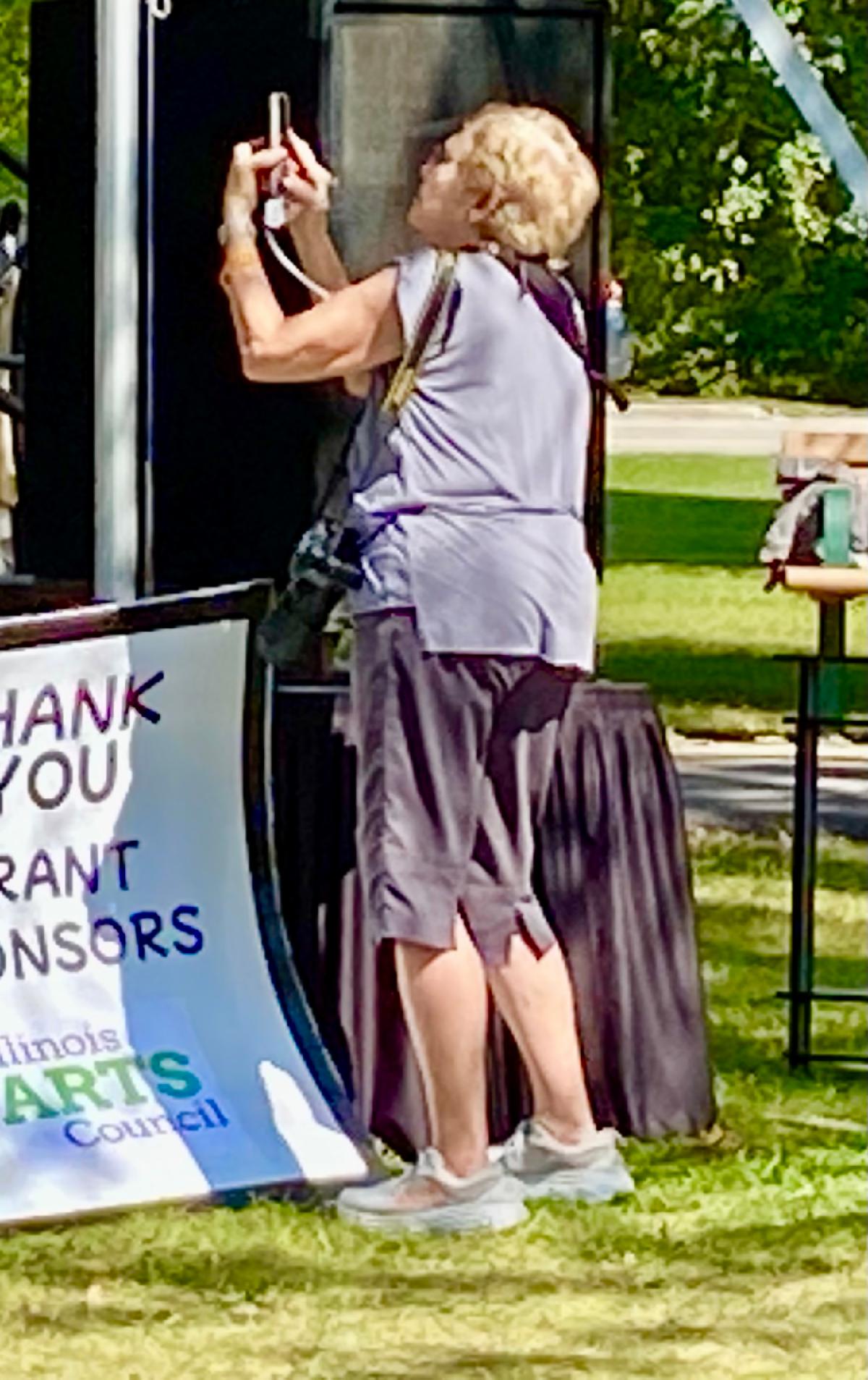
ABOVE:
Jen snapping photos of
performers on
stage.
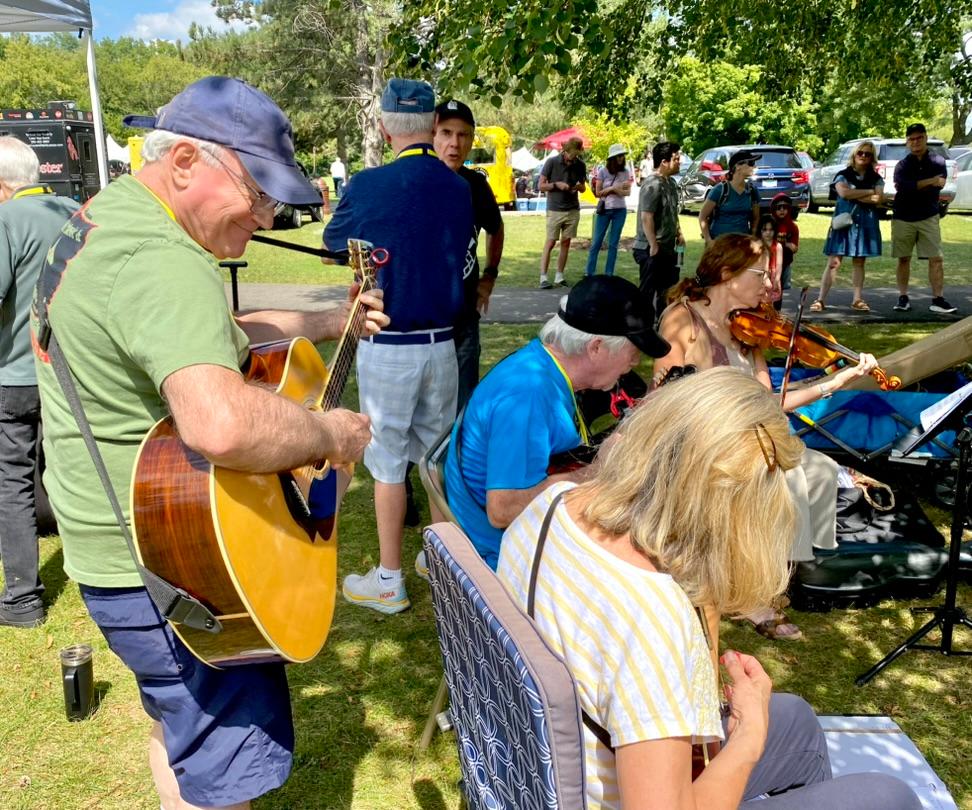
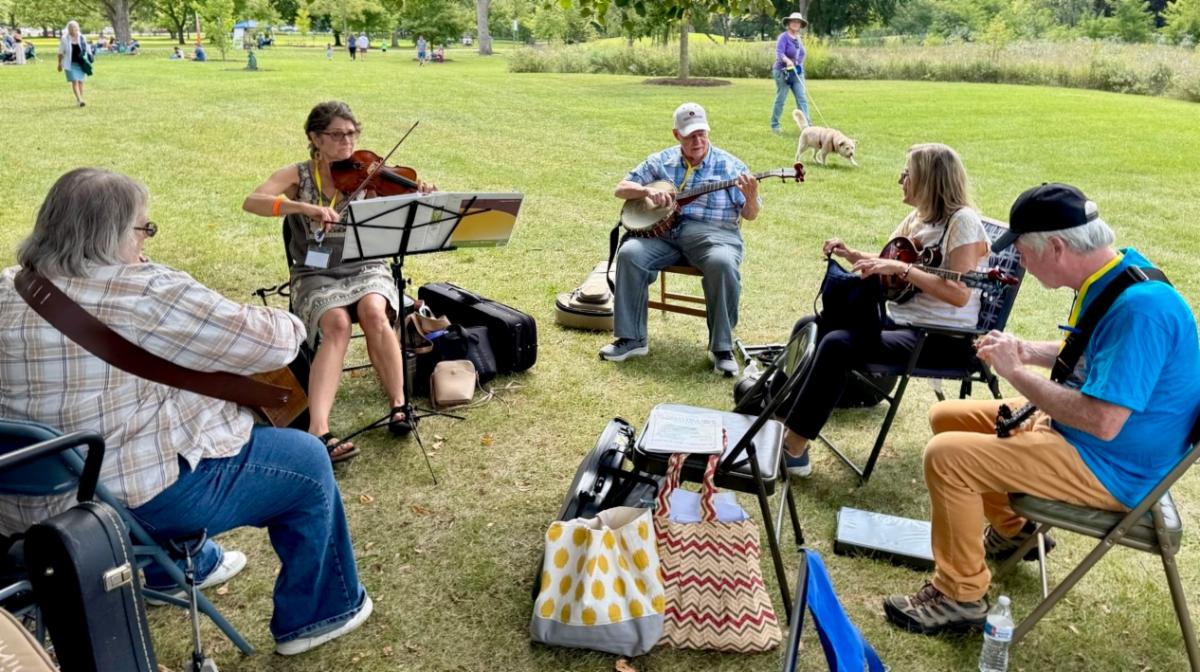
LEFT:
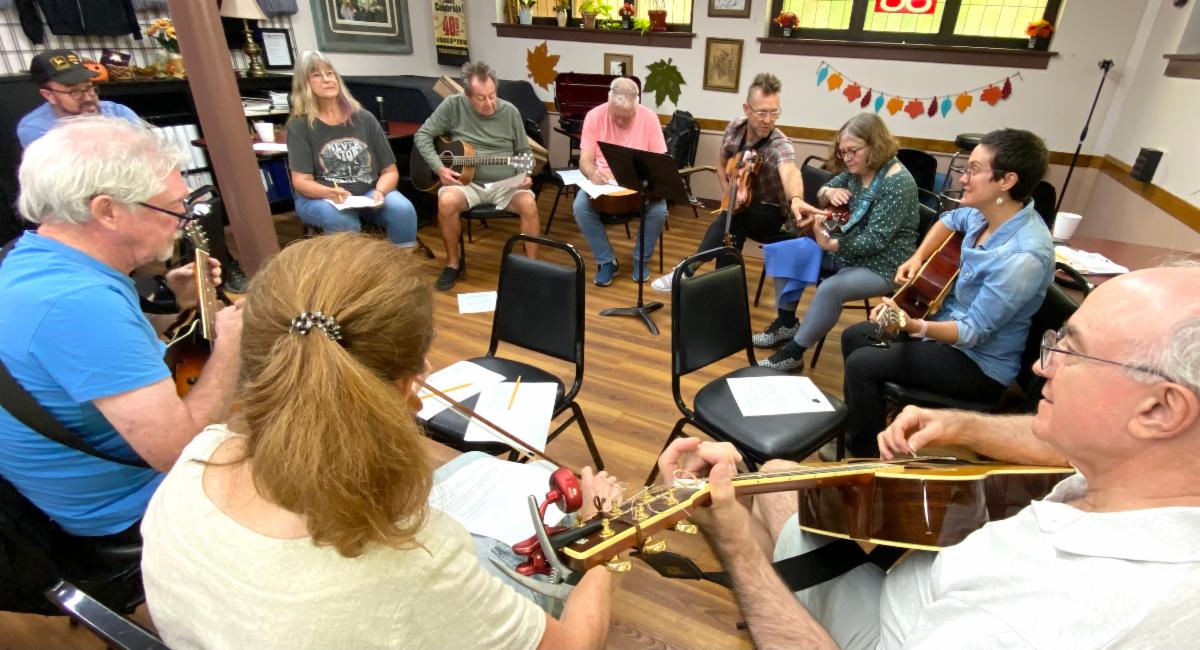
Whole lotta jammin'
going on!
|
|
|
Does
anybody remember
the
New
Lost City
Ramblers?
"They
were so faithful to the
old 78s they learned
from — you could almost
hear the scratches . .
.”
During
the folk boom of the
late '50s and early
'60s, the New Lost City
Ramblers introduced
audiences to the
authentic string band
sound of the 1920s and
'30s. And, in the
process, helped educate
a generation that had
never heard this
uniquely American sound
of old-time
music.
|
|
|
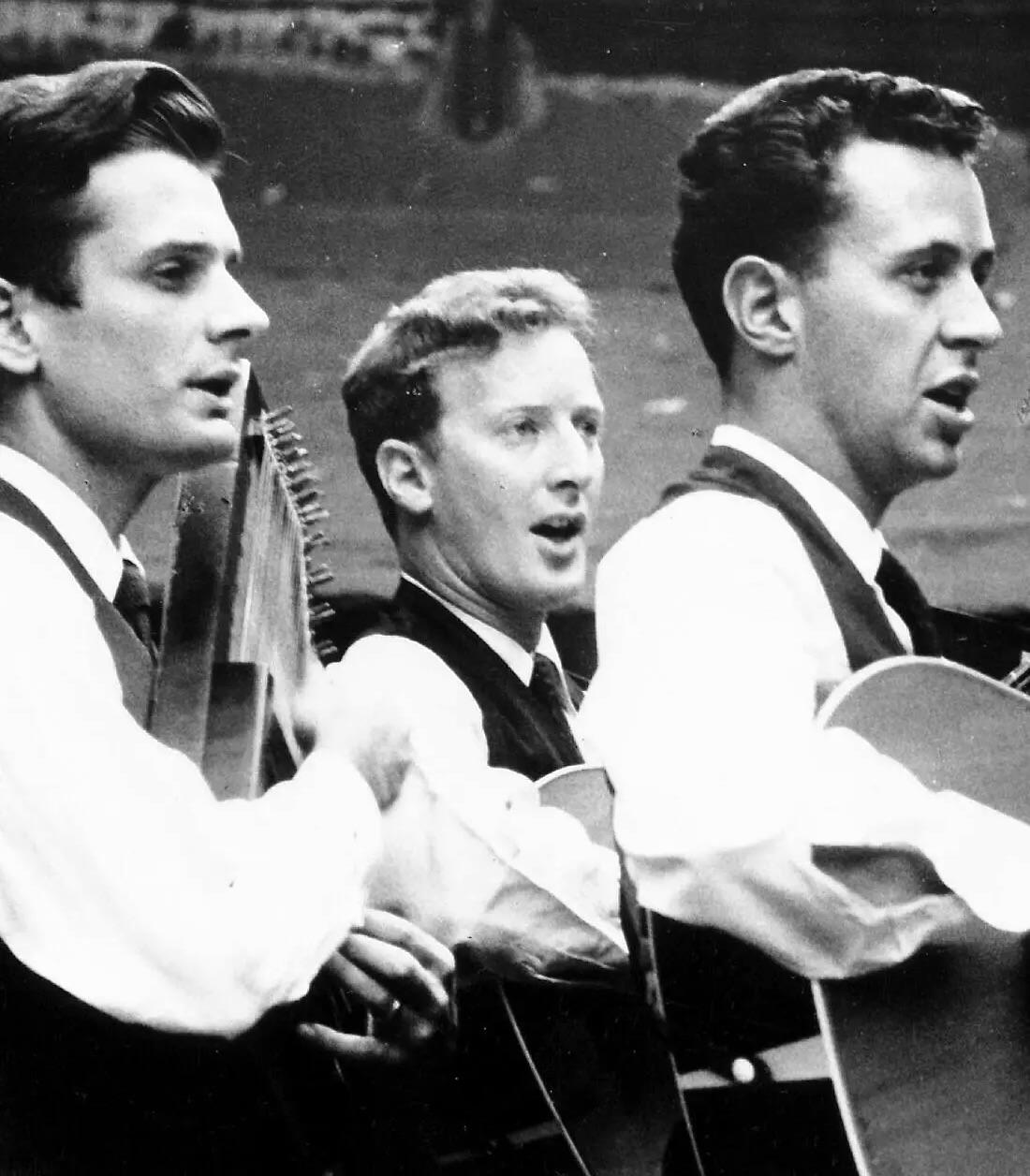
The
New Lost City Ramblers —
or NLCR, or simply the
Ramblers — distinguished
themselves by focusing
on the traditional
playing styles they
heard on old 78rpm
records of musicians
recorded way back in the
day. One reviewer says,
“they added guts and
reality to the folk
movement, performing
with humor and obvious
reverence for the
music,” and directly
influenced countless
musicians.
They
refused to "sanitize"
these southern sounds as
did other folk groups of
the time, instead,
striving for an
authentic sound.
|
|
The
original group was
formed in 1958 in New
York City by Mike
Seeger, John Cohen and
Tom Paley. The band
toured whenever they
could and recorded
frequently for Folkways.
Their shows are
legendary for their
onstage
banter.
|
|
And
the group’s name?
It’s
a good guess that the
New
York City Ramblers
would
not have worked — they
needed a more
“intriguing” name. So
they named themselves
based on three
influences: (1) An old
tune called "New Lost
Train Blues,” (2) A
favorite old-time group,
the North Carolina
Ramblers, and (3) A
reference to the urban
settings in which they
played.
After
some informal playing
and swapping of
repertoire, the band
burst onto the New York
folk scene with an album
for Folkways Records in
1959. It was an
immediate sensation,
“selling hundreds of
copies” — which doesn’t
sound like much, but
actually wasn’t bad for
this kind of music back
then. Many folk fans
were astonished to hear
rare old records come to
life, both on vinyl and
in concerts.
Their
popularity grows . .
.
They
recorded five albums of
traditional music in the
early ‘60s, making the
Ramblers famous (at
least to folk
enthusiasts) and leading
to TV appearances,
successful tours, and
performances at the
Newport Folk Festival.
They brought authentic
folk music to a huge
audience, were highly
entertaining, and led
their audience to
rediscover the original
music on which they
based their band.
|
|
But
they weren't making a
lot of money. Seeger had
a job with the
Smithsonian, Cohen made
industrial films, and in
1962, Paley got an offer
from Cambridge
University and moved to
England. Apparently
there were “other
issues” as well — when
Paley refused to sign
statements about his
political
allegiances.
When
Tracy Schwarz joined
Seeger and Cohen, the
Ramblers' focus changed
slightly. Schwarz knew
his way around country
music, including a genre
regarded with some
suspicion by folkies . .
. bluegrass,
which many purists
thought was “too
commercial.” But to the
Ramblers, the continuity
between their old-style
music and bluegrass was
obvious. Without
abandoning the older
material, they now had a
rich new genre to
explore.
|
|
"A
one-stop tour of
America’s old-time
musical traditions,
performed with skill,
perfection, and humor."
-
Sing
Out!
Magazine
|
|
NLCR
- Personal
Memories
|
|
|
The
musicians . . .
Mike
Seeger — He
was surrounded by family
members steeped in folk
music. His father was a
folklorist and his
mother was a composer
who would transcribe her
husband’s field
recordings. His older
half-brother Pete, his
sister Peggy and her
husband Ewan MacCall
were all well-known folk
performers. Even
his sister Penny
got in on the act,
marrying NLCR’s member
John Cohen.
Before
long Seeger was
exploring the techniques
of traditional
musicians, eventually
meeting others who had
the same interests —
including . . .
John
Cohen — A
photographer and film
maker who'd been
introduced to folk music
by his family. He
performed and documented
the traditional music of
the rural South and
played a major role in
the folk revival. He
made expeditions to
Peru to film and
record the indigenous
culture. Cohen was also
a professor of visual
arts at SUNY (State
University of New York)
Purchase
College for 25
years.
Cohen
is said to have inspired
“John” of the Grateful
Dead’s song “Uncle
John’s
Band.”
Tom
Paley — A
Yale-trained
mathematician and banjo
wizard, who once
said,
“When
we formed The New Lost
City Ramblers it was the
kind of thing I'd been
doing for quite a few
years . . . It didn't
feel particularly
revolutionary to me but
I understood we had
quite an impact on young
people like Dylan and
the Grateful
Dead.”
He
left the band in 1962
when Cohen and Seeger
wanted the group to
become more
professional. He was
replaced by . .
.
Tracy
Schwarz —
A multi-instrumentalist
(fiddle, guitar, banjo,
accordion, and more), he
is regarded as one of
the great musicians of
traditional American
roots music. His
recorded work includes
three Grammy Award
nominations. The
Ramblers soon absorbed
the bluegrass, folk and
Cajun influences that
Schwarz brought to the
band — which soon became
one of the mainstays of
Folkways Records,
recording nine albums
between 1964 and 2009.
(Schwarz
died in March of this
year.
See
his obituary in the
July
issue of
QuarterNotes.)
Time
goes by . . .
By
the 1980s, the three
Ramblers had substantial
careers and families,
and, one hears, weren't
getting along too well.
But they did realize one
thing: Their final
album, recorded during a
1997 reunion, was
called There
Ain't No Way
Out.
|
|
“Everything
about them appealed to
me—their style, their
singing, their sound. I
liked the way they
looked, the way they
dressed and I especially
liked their name. Their
songs ran the gamut in
style, everything from
mountain ballads to
fiddle tunes and railway
blues... I'd stay with
the Ramblers for days.
At the time, I didn't
know they were
replicating everything
they did off old 78
records, but what would
it have mattered anyway?
It wouldn't have
mattered at all. They
had originality in
spades, were men of
mystery. I couldn't
listen to them
enough.”
-
Bob Dylan
|
|
|
Being
a fan of the pop folk
artists of the day, I
had never heard of The
New Lost City Ramblers.
Until a college roommate
(also named Bill)
enlightened me with a
song called “Gold Watch
& Chain.”
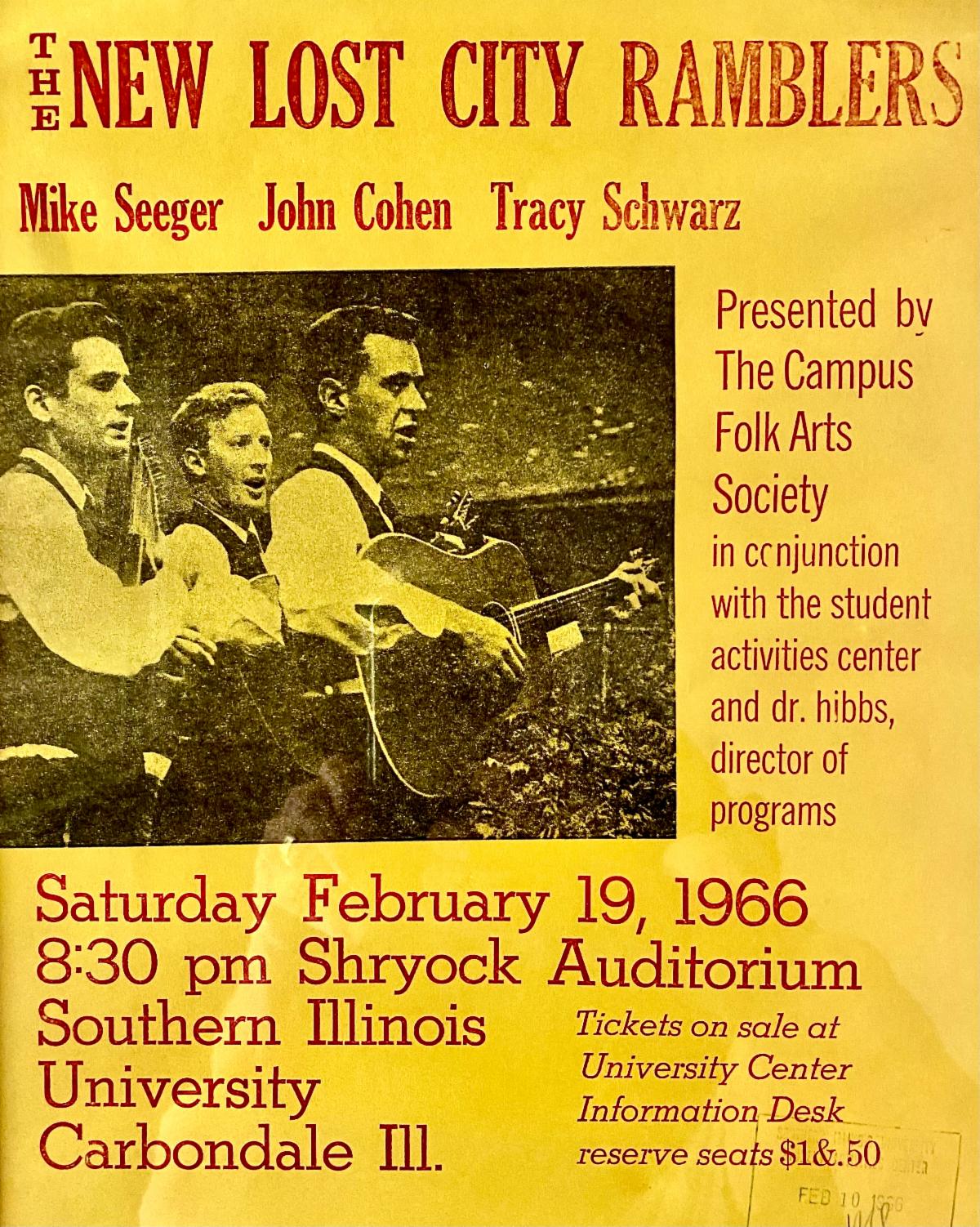
In
1966 I was a member of
the SIU Campus Folk Arts
Society and we decided
to get
an “affordable”
folk act to come to
town. Bill (the
roommate) immediately
said it’s gotta be the
Ramblers. He contacted
them in New York, and
somehow convinced them
to come to
Carbondale.
I
was put in charge of
promotion. 99% of the
students had never heard
of the Ramblers, so it
was a challenge to fill
the auditorium with
enough people to cover
expenses. I decided to
do a multi-week “teaser”
campaign of posters
around campus. Somehow
it worked and we sold
out the
auditorium.
Early
morning, on the day of
the concert, Mike, John
and Tracy, plus all
their instruments and
overnight luggage,
jammed into a small car
and drove non-stop from
NYC, arriving just a few
hours before their
concert. And that night
the they put on a heck
of show, filled with
great music and lots of
humor.
|
|
|
Being
a very low-budget
affair, my two roommates
and I moved out of our
off-campus trailer for
the night so the
Ramblers had a place to
sleep after the
concert.
The
next morning we held a
workshop back on campus
with the trio. All three
guys were very nice —
but it was obvious they
needed coffee and
couldn’t wait to get
back on the road to New
York.
–
Bill Lemos
|
|
|
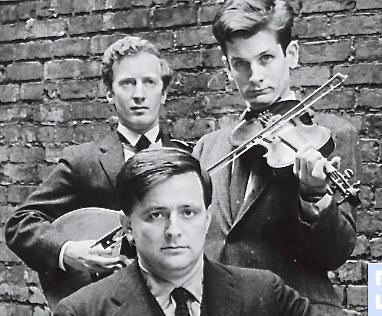
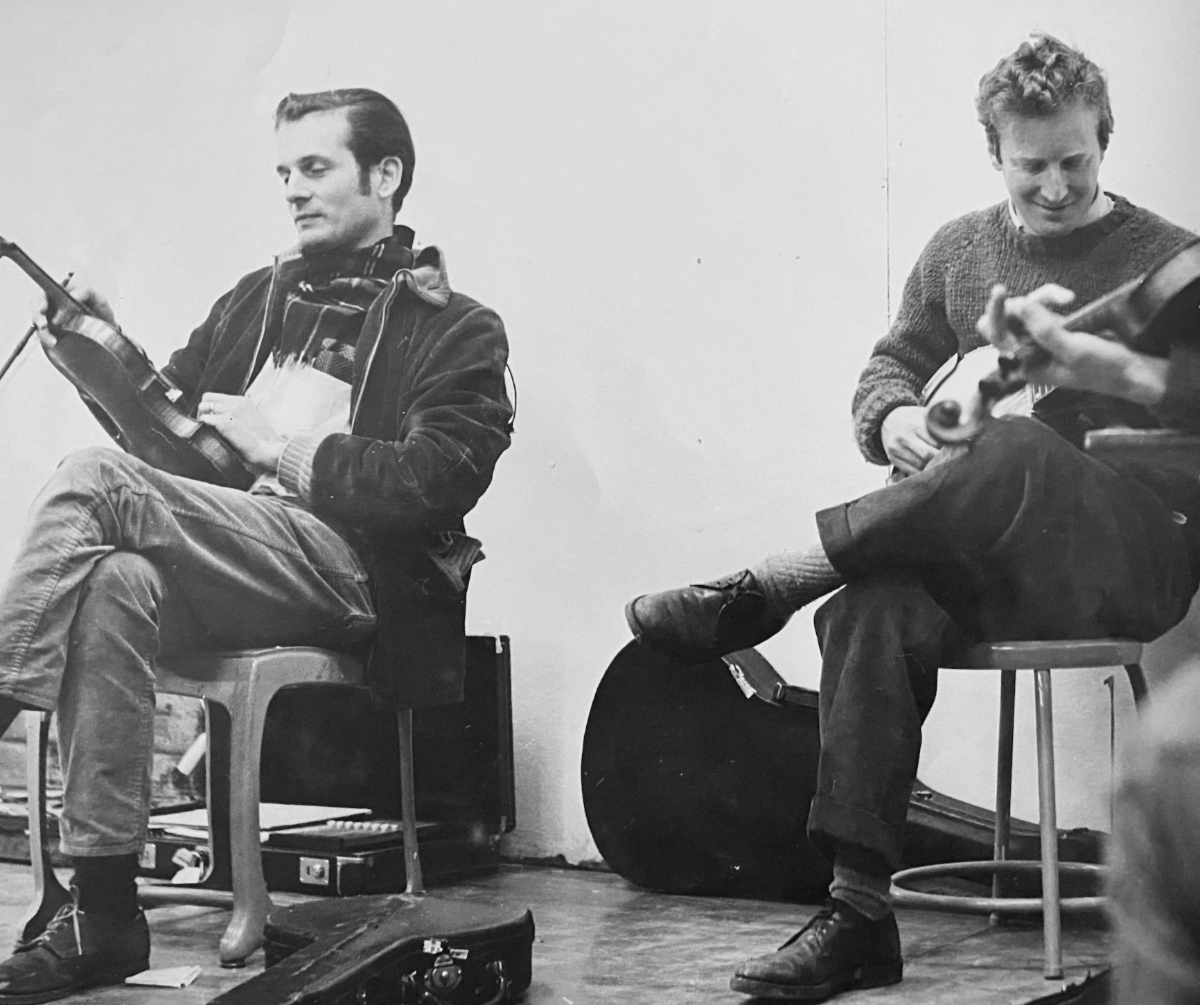
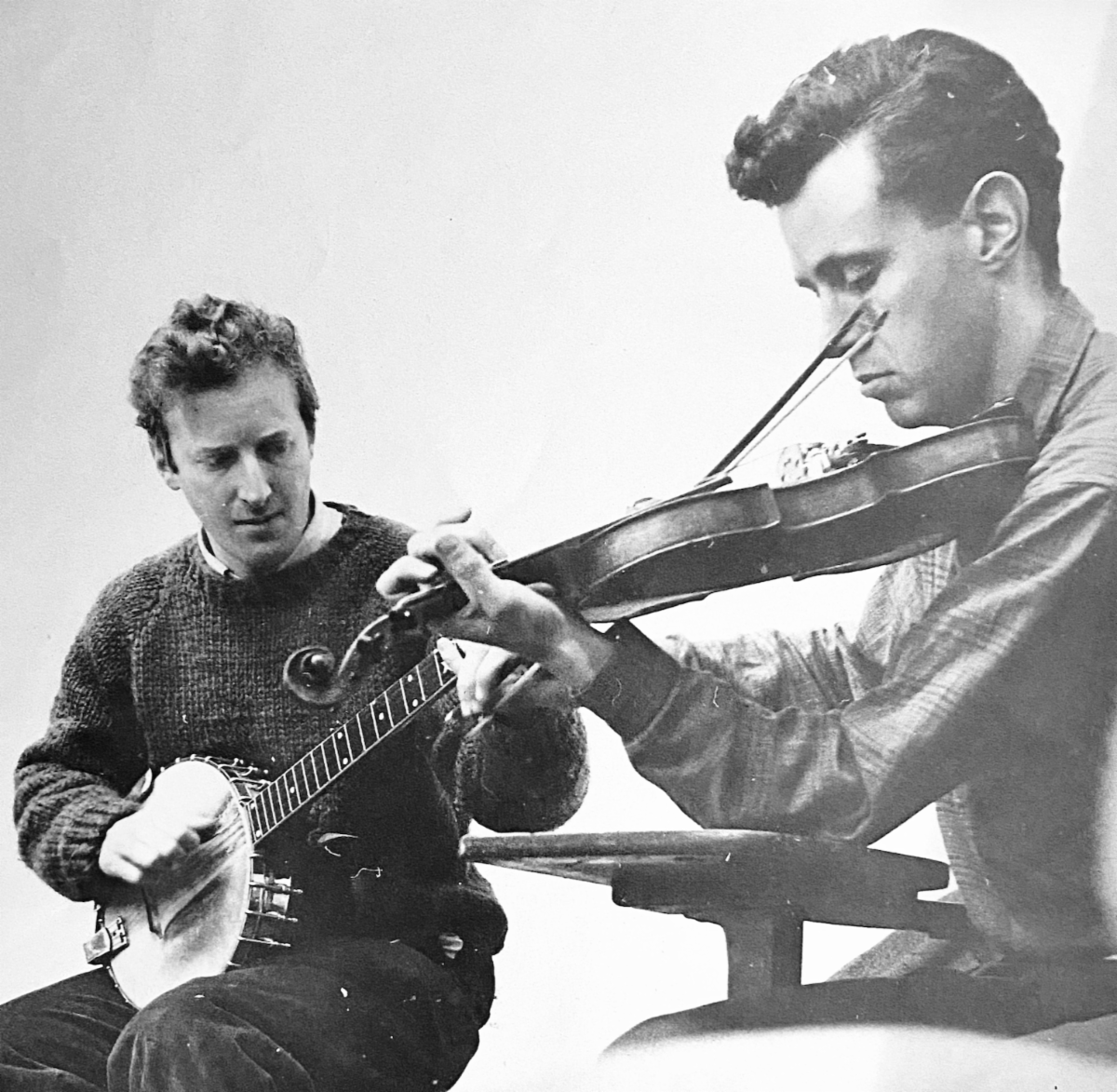
ABOVE:
Cohen and Schwarz
,
both looking
serious.
LEFT:
Seeger, looking bored,
and Cohen, looking
cheerful.
|
|
|
Two
Way
Street
Coffee
House —
Friday
Night
Concert
Series.
Doors
open at
7:30pm
and
concerts
start at
8pm. You
can also
view
concerts
online —
more
information
on Two
Way
Street
Coffee
House or Facebook.
Maple
Street
Concerts.
Enjoy
live
concerts
at Maple
Street
Chapel
in
downtown
Lombard.
Please
check
the Maple
Street website for
concert
listings.
Other
venues .
.
.
-
Acoustic
Renaissance
Concerts
-
Old Town
School
Of Folk
Music
-
Tobias
Music
Concerts
|
|
5th
Saturday
Workshop
features
Bobcat
Opossum
|
|
On
August
30 the
third
5th
Saturday
Workshop
of the
year was
held at
Two Way
Street
Coffee
House.
The
“Sing
And Play
In
Harmony”
Workshop
featured
muti-instrumentalists
and
educators
Sean
Hoffman
and
Ellen
Coplin
of the
duo
Bobcat
Opossum.
|
|
They
demonstrated
through
hands-on
music
theory
and
group
participation,
exploring
how to
hear
harmonies
and
express
them
with
voice
and
instrument.
One
person
commented
that at
times
the room
seemed
to
“vibrate”
as the
group
experimented
building
harmonies.
|
|
The
workshops
are held
at Two
Way
Street
Coffee
House,
in
partnership
with
Plank
Road,
under
the
direction
of Joel
Simpson
and
Jennifer
Ashley.
One
more
workshop
to come!
Nov. 29:
"Ukulele
with Lil
Rev."
|
|
Two
Way
Street’s
Heritage
Matinee
Concert
Series .
.
.
|
|
On
October
5, Two
Way
Street
Coffee
House
presented
another
in its
series
of
Sunday
afternoon
Heritage
Matinee
Concerts.
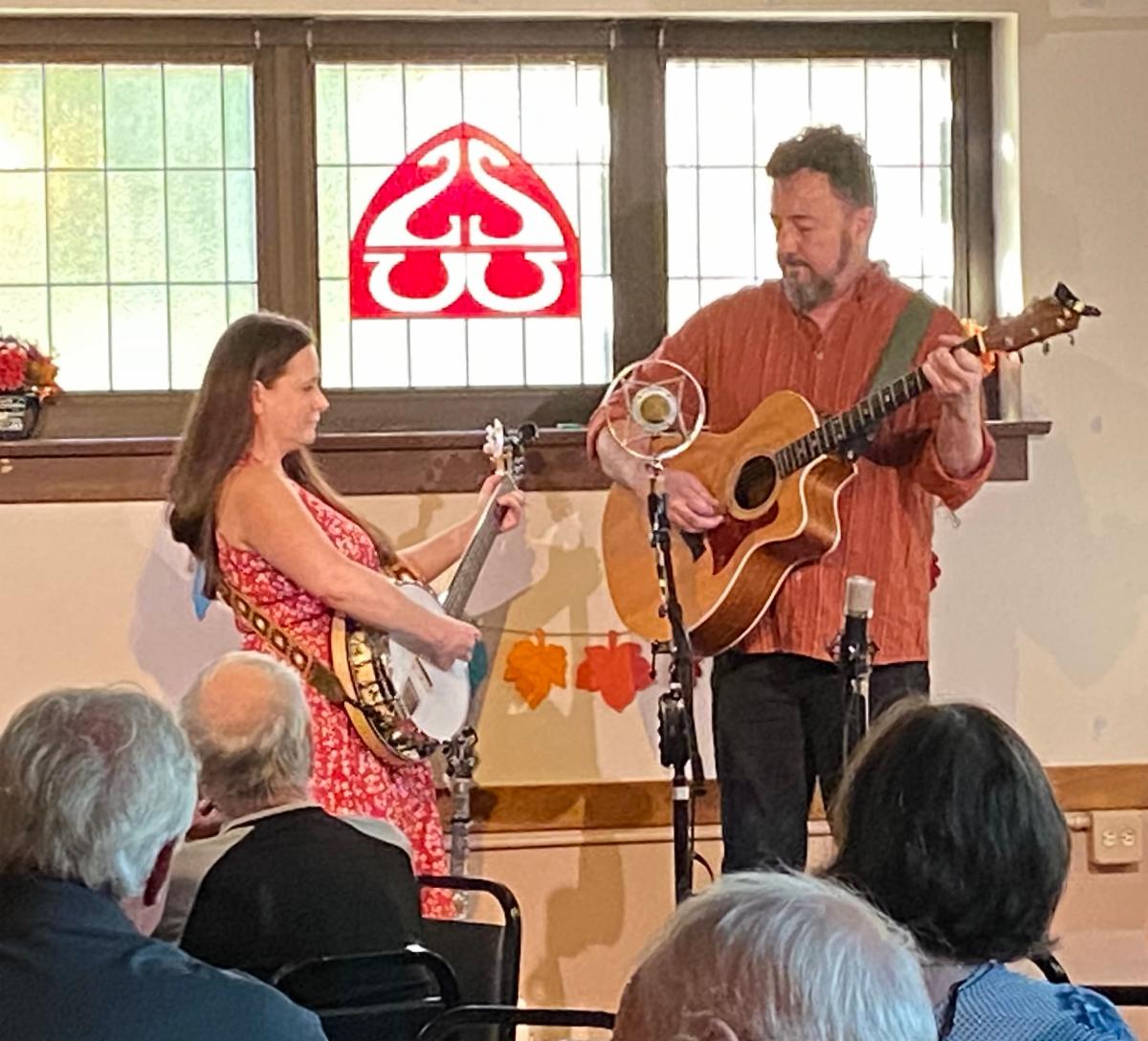
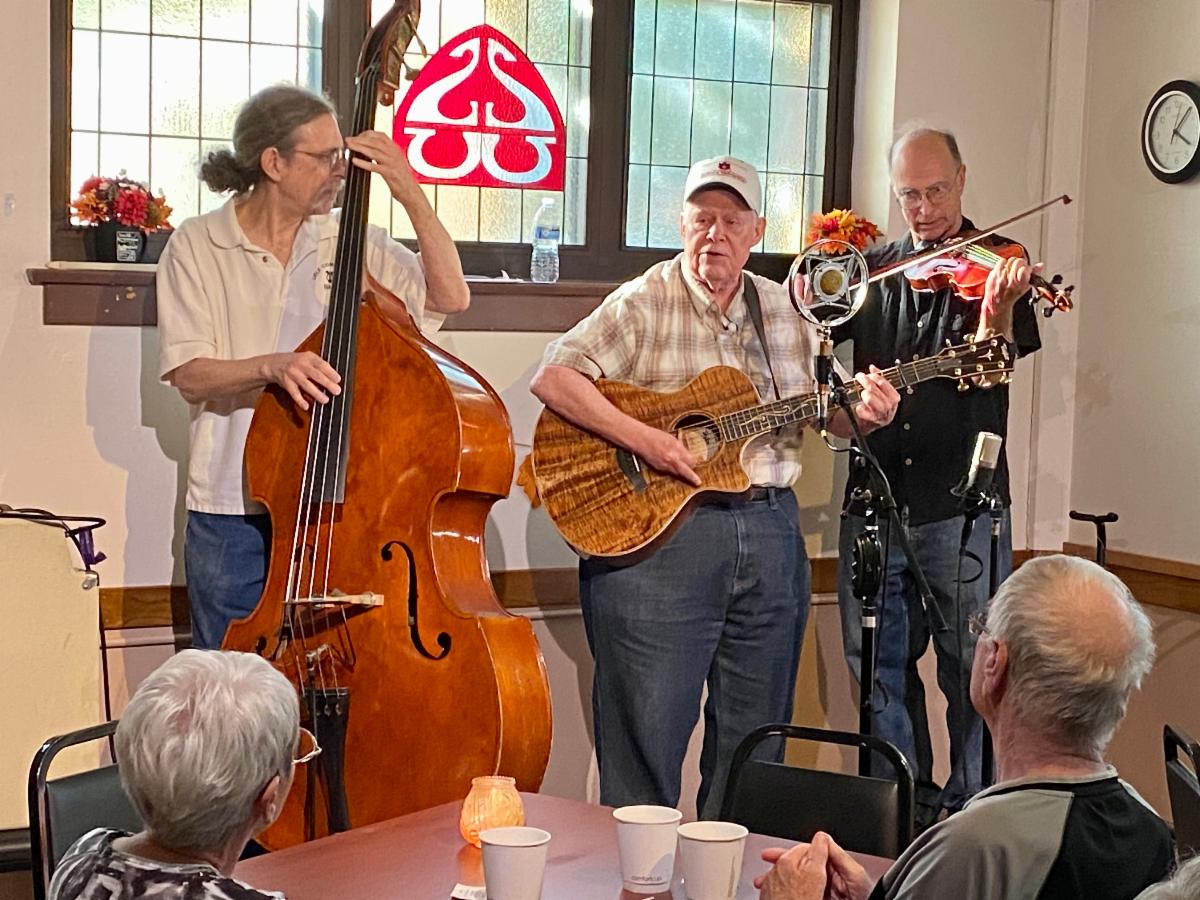
Mark
Dvorak
and
Ashley
&
Simpson
were
joined
by two
local
artists
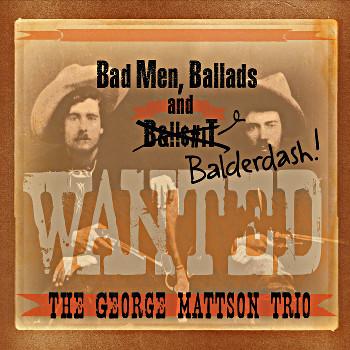
— the
ever-popular
George
Mattson
Trio,
and
singer-songwriter
Lisa P.
Medina.
100%
of the
free-will
donations
collected
at each
concert
will
support
Two Way
Street’s
operation
and
programming.
If
you
missed
the
concert,
it’s
available
online
at
twowaystreet.org.
|
|
The
finale
featured
Mark
Dvorak
and
Marianne Mohrhusen
— capped
off with
a
rousing
rendition
of "This
Land Is
Your
Land" by
all
performers
on
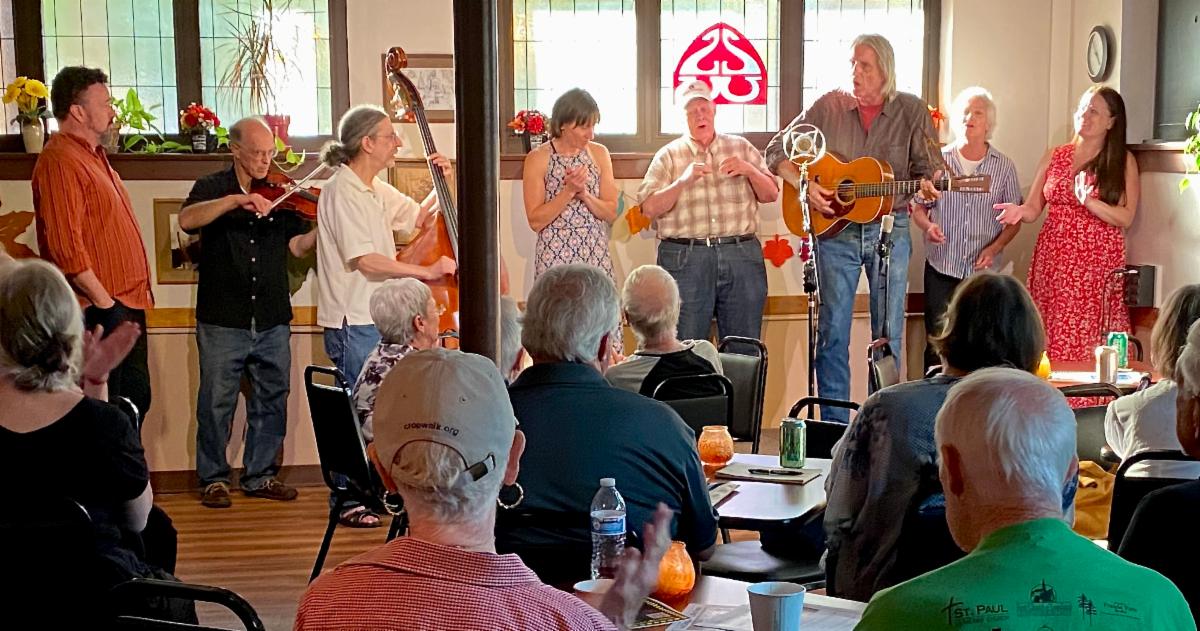
stage!
|
|
Jennifer
Ashley and
Joel Simpson
|
|
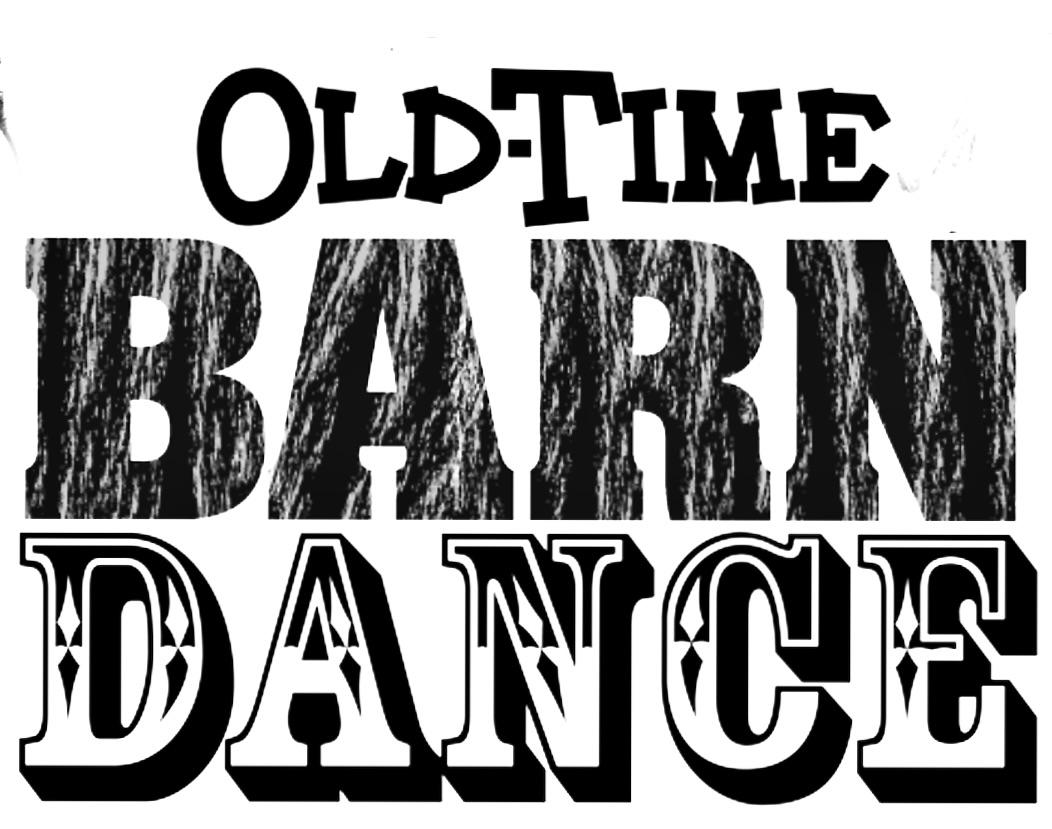
Old-Time
Barn
Dance
Season
is
here!
Saturday,
October
11
kicked
off the
season’s
first
Barn
Dance.
The
Plank
Road
String
Band
provided
the
tunes,
and Meg
Dedolph
was the
caller.
It was a
fun-filled
evening
as
dancers
enjoyed
square,
line,
reels,
waltzes
and
more!
|
|
Mark
your
calendar
for
these
upcoming
barn
dances:
November
15
February
7
March
21
April
25
May
9
Dances
begin at
7pm and
are
co-sponsored
by Plank
Road and
Two Way
Street
Coffee
House.
Click
here for
more
details!
|
|

|
|
The
power of
singing
together
Family
singing
with
your
kids or
grandkids
. . .
it’s a
good
thing!
|
|
Condensed
and
edited
from an
article
in The
Epoch
Times by
Walker
Larson.
Thanks
to
John
Pratapas
for
forwarding
it to
Bob
O’Hanlon.
|
|
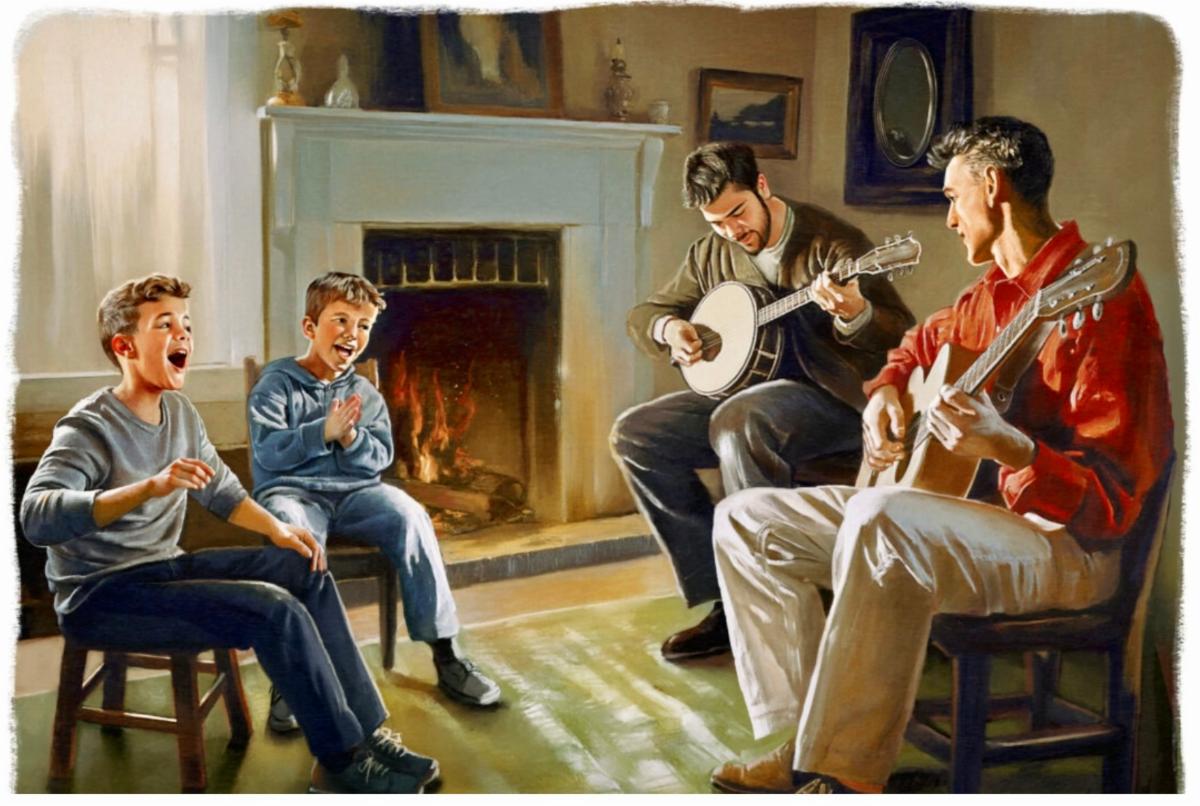
Who
sings
together
as a
family
anymore?
Almost
no
one.
Family
singing
was once
an
activity
considered
an
essential
part of
family
life.
Long
winter
evenings
by the
fire, or
humid
summer
afternoons
on the
porch,
passed
swiftly
and
sweetly
to the
sounds
of the
guitar,
banjo,
fiddle,
and a
chorus
of
familiar
voices.
Yes,
it’s
only
October,
but the
holidays
will be
here
before
we know
it. And
that’s a
great
time to
gather
the kids
for some
family
folk
songs.
In
1955,
Welsh
poet
Dylan
Thomas
wrote:
“Always
on
Christmas
night
there
was
music.”
The
Power of
Song
One
of the
many
benefits
of
singing
and
playing
music
together
with
family
and
friends
is that
it plays
a role
in the
education
and
formation
of
children.
Aristotle
believed
that
music
had the
power to
form
character
in a
positive
way:
“In
listening
to such
strains
(of
music)
our
souls
undergo
a
change.”
One
way to
bring
music
back
into the
home and
children’s
lives is
to teach
them
good old
traditional
folk
songs.
What
could be
easier —
and more
fun?
Learning
folk
songs
connects
children
to their
heritage
and may
provide
opportunities
for
impromptu
history
lessons.
Singing
together
also
makes
possible
a rare
form of
social
bonding
— as we
all know
so well
at Plank
Road.
Once,
almost
everyone
knew a
core
list of
American
folk
songs
and
could
join in
at
will.
But
we can
play our
part in
passing
on these
songs
that our
grandparents
and
great-grandparents
sang as
part of
our
American
identity.
Here
are just
a few
traditional
folk
songs
(plus a
little
history)
that you
can
explore
with
your
kids —
or
grandchildren.
(Click
the
links to
hear the
songs.)
‘Yankee
Doodle’
This
classic,
patriotic
American
song is
tied
with our
nation’s
history.
The tune
already
existed
by the
1750s,
but in
1755, a
British
doctor
wrote
new
words
that
made fun
of the
American
soldiers
he was
serving
alongside
in the
French
and
Indian
War. We
don’t
know the
exact
origin
of the
word
“Yankee,”
but it
definitely
refers
to
American
colonists.
The term
“doodle”
means a
fool or
simpleton,
while
“dandy”
refers
to a
foppish
man who
paid too
much
attention
to his
dress
and
manners.
Not very
flattering.
But the
Americans
took the
insults
with wry
good
humor
and
adopted
the song
for
their
own
purposes.
By the
time of
the
American
Revolution,
it had
become a
marching
air of
defiance,
with
revised
lyrics
depicting
Washington
astride
a
warhorse.
‘Crawdad
Song’
This
tune,
sometimes
called
“Crawdad
Hole,”
seems to
have
grown
out of
African
American
blues,
Anglo-American
dances,
and the
experience
of
workers
constructing
levees
along
the
Mississippi.
The
simple,
repetitive
lyrics
about
hunting
for
crawdads
(crayfish)
make it
easy for
children
to learn
and
enjoy.
‘Oh
Shenandoah’
The
precise
roots of
this
American
classic
remain
obscure,
although
it
likely
developed
before
the
Civil
War.
Folklorist
Alan
Lomax
theorized
the song
was
actually
a sea
shanty
written
by
French
Canadian
voyagers.
Sea
shanties
helped
sailors
keep up
morale,
maintain
a rhythm
when
rowing
or
performing
other
tasks,
and
build a
sense of
solidarity.
Even
the
exact
meaning
of the
words
remains
uncertain.
Some
argue
that it
describes
the
Shenandoah
River,
and
others
that it
refers
to the
daughter
of the
Oneida
Indian
Chief
Shenendoah.
‘Git
Along
Little
Dogies’
This
cowboy
song
from the
late
1800s
describes
the
process
of
herding
orphaned
calves,
termed
“dogies.”
Because
the
calves
were
weaned
too
early,
they
weren’t
yet
ready to
easily
digest
range
grass.
That led
to
swollen
bellies
called
“dough-guts,”
which
cowboys
altered
to
“dogies.”
The
pitter-patter
of this
cowboy
song
reminds
listeners
of a
trotting
horse.
‘Turkey
in the
Straw’
This
song
will
appeal
to
animal-loving
kids
with its
comedic
lyrics
and
buoyant,
fast-pace.
So
energetic
is the
song
that it
makes an
excellent
dance
tune.
There
are
dozens
more,
such
as:
“This
Land Is
Your
Land,”
“Aunt
Rhody,”
“Don’t
Fence Me
In,”
“Down In
The
Valley,”
“Home On
The
Range,”
“I’ve
Been
Working
On The
Railroad,”
“Michael
Row The
Boat
Ashore,”
“On Top
Of Old
Smokey,”
“Red
River
Valley,”
“You Are
My
Sunshine.”
And
our
Plank
Road
Songbooks
are full
of these
and
other
great
songs!
|
|
“Music
is
probably
the only
real
magic I
have
encountered
in my
life.
There’s
not some
trick
involved
in it.
It’s
pure and
it’s
real. It
moves,
it
heals,
it
communicates
. .
.”
- Tom
Petty
|
|
|
|
Connie
Francis
The
most popular female
vocalist in the United
States between 1958 and
1964 was Connie Francis.
She died July 16 at age
87.
One
of the biggest-selling
pop singers of the 50s
and 60s, she had huge
hits like “Who’s Sorry
Now,” “Stupid Cupid,”
and “Lipstick On Your
Collar.” Sixteen of
those hits went
gold.
"Everybody's
Somebody's Fool," came
out in 1960, making her
the first female singer
to reach No. 1 on
the Billboard Hot
100. She also sang the
theme song and appeared
in the 1961
film, Where
the Boys Are.
At
the height of her career
she occupied a unique
position in the American
record industry —
selling over 40 million
records worldwide before
she was 25 — and
amassing sales that
comfortably outstripped
most of her male
contemporaries
Born
Concetta Franconero in
Newark, NJ, she changed
her name at age 13 when
television host Arthur
Godfrey suggested that
"Connie Francis" would
be easier to
pronounce.
She
received a recording
contract in 1955,
initially overdubbing
her singing voice for
film actresses. She
recorded 10 singles
under her own name —
they all flopped. But
opportunity knocked with
her 11th release —
“Who’s Sorry Now.”
It shot into the
Top 10 and sold a
million copies after
exposure on Dick Clark’s
American Bandstand. A
run of hits followed,
scoring nearly thirty
Top 40 successes on both
sides of the Atlantic
over the next six
years.
Bobby
Darin wrote several
songs with Francis — and
they eventually became
lovers. However, they
split up after Francis’s
father threatened Darin
with a shotgun.
(Yikes!)
She
recorded music in
multiple languages,
including Italian,
French, German, Yiddish,
Spanish and
Japanese.
In
1967 she underwent a
cosmetic procedure which
damaged her ability to
sing. It took multiple
surgeries before Francis
could sing again.
The
latter part of her
career was marred by a
succession of tragedies.
In 1974 she was raped at
knife-point at a hotel.
She sued the hotel and
won a $2.5 million
award. In 1981 her
brother George, an
attorney who had
testified against
organized crime, was
murdered by the Mafia.
The events triggered
years of depression.
Though Connie tried to
resume her recording and
touring career, she was
diagnosed with manic
depression, and in 1984
she attempted
suicide.
Francis
was married and divorced
four times between 1964
and 1985. She resumed
performing in 1989 and
eventually made a
comeback in the 90s,
retiring in 2018.
Earlier
this year she gained
social media fame
because of the
resurgence of her
1962 recording,
"Pretty Little Baby,"
which went viral on
TikTok.
|
|
|
Sonny
Curtis
Singer,
songwriter and
guitarist, Sonny Curtis,
died September 19 at age
88.
Known
for his collaborations
with Buddy Holly,
and as a member
of the Crickets, he
continued with the band
after Holly's
death in
1959.
His
best known compositions
include ”Walk Right
Back,” a major hit in
1961 for the Everly
Brothers; “I Fought
The Law,” covered by the
Bobby Fuller Four and
others; "Love Is All
Around,” the theme song
for The Mary Tyler Moore
Show; “More Than I
Can Say,” co-written
with The Crickets'
drummer Jerry
Allison and a hit
for Leo Sayer; and "I'm
No Stranger to the
Rain," a #1 Country hit
for Keith Whitley in
1989.
Curtis
was born in Texas, and
grew up with bluegrass
music. He learned
the guitar at a young
age from his three
uncles who had a
bluegrass band. He
eventually formed his
own bluegrass band with
his two older
brothers.
As
a guitarist, he played
on some of Buddy Holly's
earlier 1956 Decca
sessions. In 1955 and
1956 he, along with
Buddy Holly, opened
concerts for rising new
star Elvis
Presley.
Curtis
worked with other
musicians by the time
Buddy Holly put together
the Crickets in 1957,
but joined the band in
late 1958, shortly
before Holly's death in
1959. He soon took over
the lead vocalist role
in addition to lead
guitar.
Curtis
was drafted in late
1959. During basic
training, he was given a
three-day pass and met
drummer Jerry Allison,
who was then with the
Everly Brothers in Los
Angeles. Curtis played
him a song he had
written, “Walk Right
Back" — and Allison had
him immediately take it
to the Everlys. They
recorded the song that
weekend and were later
rewarded with a
Billboard Top 10
hit.
Curtis
left the band several
times to pursue his solo
career, but made
occasional guest
appearances and
recordings with the
Crickets. In 2016, he
performed at the
Crickets' farewell
concert at the legendary
Surf Ballroom in Clear
Lake, Iowa, the venue of
Holly's last performance
before his death.
Songs
written by Curtis were
recorded by Glen
Campbell, Bobby
Goldsboro, Andy
Williams, Anne Murray
and others. While "I
Fought the Law" was a
big hit for other
artists, Curtis enjoyed
the royalties. He said
it only took him 15
minutes to write: "It's
my most important
copyright."
Curtis
was inducted into three
music Halls of Fame
including the Rock
and Roll Hall of
Fame.
|
|
|
A
Special
Thanks
to our
Membership
Contributors!!
Sustaining
Members
-
Betsy
&
Dave
Anderson
-
Dan
Anderson
-
Tom
Henry
&
Marian
Indoranto
- Rich
Pawela
-
Carol
&
Fred
Spanuello
Supporting
Members
($50 -
$199)
-
Anonymous
-
Joe
Bella
-
Bill
&
Mary
Boylan
-
Frank
&
Helene
Clarke
-
Bob
Cordova
-
Tony
&
Ann
Janacek
-
Dottie
&
Gerry
Lee
-
Bill
&
Connie
Lemos
-
Marvin
Lensink
-
Andrew
Malkewicz
-
Chuck
&
Susan
Maltese
-
Bill
&
Sandhya
Matthews
-
George
Mattson
- Joseph
Michelotti
-
Marianne
Mohrhusen
&
Mark
Dvorak
-
Gregg
&
Betty
Ann
Morton
-
Bud
&
Mary
Jane
O'Connor
-
Bob
&
Mimi
O'Hanlon
-
Jennifer
&
Jim
Shilt
-
Dale
Stallmann
-
Tobias
Music
-
James
Videbeck
If
you
would
like to
become a
member
or just
need to
renew,
here is
a link
to
the renewal
form
you can
print
and
mail.
|
|
|
|
Bob
O'Hanlon
-
President
reohanlon@gmail.com
(630)
702-0150
Bill
Lemos -
VP,
Secretary
lemos.bill@comcast.net
2025
Board
Members
-
Bethany
DeHaan
-
Treasurer
-
Dottie
Lee
-
Technical
Support
-
Kristen
Fuller
-
Membership
-
Jennifer
Shilt
-
Jim
Gilroy
-
Dave
Humphreys
|
|
Bill
Lemos -
Editor
Dottie
Lee -
Tech
&
Distribution
Bob
O'Hanlon
Jen
Shilt
Kristen
Fuller
|
|
|
|
|
|
.gif)


.jpeg)
.jpeg)